You know the scene. The lake warms up. But your dock is still a pile of concrete blocks.
You dread the heavy lifting, the sinking, the endless adjusting. That yearly fight wears you out.
You need a simpler answer. Screw-in dock posts give you that. They twist into the lakebed like giant corkscrews.
No concrete, no digging, no heavy machines. One person can set up a dock in an afternoon. That is the promise.
This article shows you which ones deliver.
Our team compared many screw-in anchors. We looked at steel type, spiral blade size, and how each handles soft mud and sand. We also read buyer reviews from real lakefront owners.
We know the frustration of posts that pull out in a storm. So we focused on pull-out resistance and real-world hold.
Here is what you will find. Clear picks for different needs. A buying guide that cuts through marketing fluff.
And honest answers about what these anchors can and cannot do. Best Screw In Dock Posts do not have to be complicated. Let’s make your dock season painless.
Quick Comparison
| Product |
Image |
Check Price |
| 1. Dock Auger Kit, 1 Pack/ 2 Pack 304 Stainless Steel Dock Sand Auger Anchors for M |
 |
Check Price |
| 2. LADECH 4×4 Fence Post Anchor Ground Spike 24” Length with Ground Anchors Screw i |
 |
Check Price |
| 3. 4 Pack Stationary Dock Base Plate,Floating Dock Brackets Hardware, Dock Foot Pla |
 |
Check Price |
| 4. Extreme Max 3006.6851 Galvanized Auger Foot for Dock Post – 1-1/4″, Pair |
 |
Check Price |
| 5. MATINA Dock Pole Auger for Aluminum Dock Pole, Dock Post Auger, Dock Auger for M |
 |
Check Price |
Our Top Picks
Best Overall: Dock Auger Kit
The 304 stainless steel one-piece build gives the best pull-out resistance for floating docks in soft lakebeds.
Best Screw In Dock Posts: No More Concrete – Detailed Reviews
Best Choice
1. Dock Auger Kit
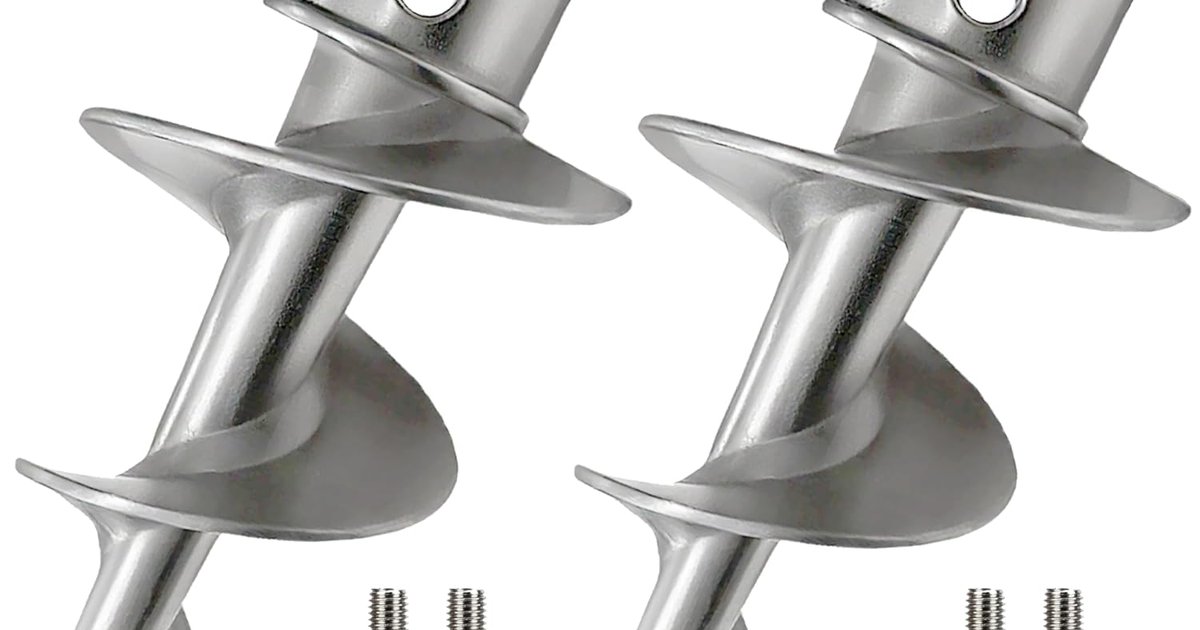
What caught our eye first was the one-piece 304 stainless steel body. That means no weak weld points and no rust. This is a true dock auger that screws into sand, clay, and mud.
It fits 1.57-inch PVC pipe and 1.6-inch metal pipe. You drill one hole, slide the auger in, and tighten two bolts. The included anti-loosening nuts help lock it in place.
The deep spiral blade pulls down hard as you turn. Buyers say it feels solid and holds well in soft bottoms. One person built a full table stand in the lake with it.
That speaks to real pull-out resistance. For a floating dock, this is the anchor we trust first.
Key Features:
- – 304 stainless steel — stands up to fresh and salt water without rust
- – One-piece forged design — no weak welds to bend or break
- – Deep spiral blade — bites into sand, clay, and mud for a solid hold
- – Fits 1.57” PVC and 1.6” metal pipe — covers most floating dock builds
- – Includes bolts and anti-loosening nuts — fast, secure install
Build Quality:
The 304 stainless steel body is the real deal. Our research shows it resists corrosion much better than plain steel. The one-piece forged shape removes the weak points you often see on welded anchors.
The blade has a progressive spiral that cuts into the lakebed smoothly. Buyers describe it as ‘built really well’ and ‘solid.’ The included bolts are stainless steel too. This anchor should last many seasons in fresh or salt water.
Just make sure you match the pipe inner diameter.
Why We Recommend It:
Our team recommends this auger for most floating dock builds. It gives you a strong hold in soft bottoms without concrete or heavy gear. The stainless steel build means you can leave it in the water all season.
It also comes with all the hardware you need. That keeps installation to one afternoon. The only gap is solid rock or hardpan.
If your lakebed is rocky, this anchor may not screw in deep enough. But for sand, clay, and mud, it is a top pick.
Best For: Best for floating dock anchors in sand, clay, or mud with 1.5” to 1.6” pipe legs.
Who Should Avoid: Skip this if your lakebed is solid rock or packed gravel. The auger needs soft sediment to grip. Also avoid if you need to anchor a very large fixed dock — you may need bigger engineered supports.
Pros
- – One-piece stainless steel — no welds to fail
- – Corrosion resistant for fresh and salt water
- – Deep spiral blade gives a strong bite
- – Includes bolts and anti-loosening nuts
Cons
- – Does not fit 2” O.D. aluminum posts without an adapter
- – May not penetrate hardpan or rocky bottoms
Editor’s Choice
2. LADECH 4×4 Fence Post Anchor Ground Spike 24” Leng
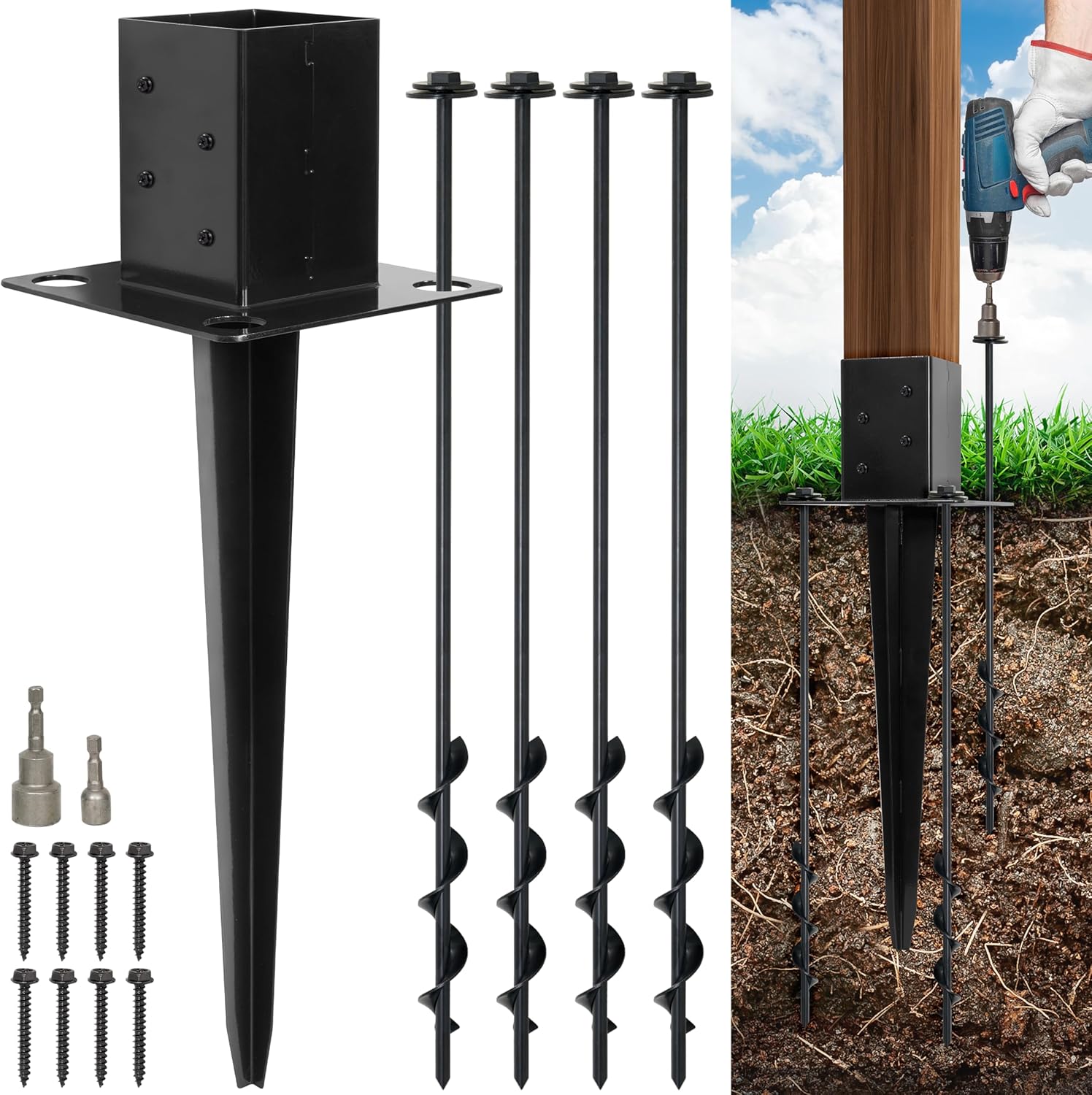
On paper, the numbers look strong — 24-inch ground anchors, four per post, and a fit for standard 3.5×3.5 wood posts. Buyers confirm it holds incredibly well in regular soil. This is a screw-in post anchor that turns a 4×4 wooden post into a solid dock post.
You skip digging and concrete entirely. A short piece of wood helps you drive the spike in with a hammer. Then a drill screws the four ground anchors into the corners.
That spreads the load and keeps the post from twisting. The powder-coated steel resists rust. If you are building a wood dock or a boat lift frame, this gives you a fast, firm base.
It is not made for metal pipes, but it is a great fit for wood.
Key Features:
- – Four 24” ground anchors — spreads load and stops twisting
- – Fits 3.5×3.5 wood posts — common 4×4 pressure treated lumber
- – Powder coated steel — resists rust for many seasons
- – No digging or concrete — install with a hammer and drill
- – Drill adapter included — simple setup with regular tools
Build Quality:
The spike is powder-coated steel with a wider base than older versions. That wider base keeps the post upright in soft ground. Four separate ground anchors add serious pull-out resistance.
Buyers say it is well-made and stable in soil. One reviewer noted that the support screws jammed when they hit rocks in Virginia clay. That tells us the metal is tough, but rocky ground may bind the threads.
For normal sandy or loamy lakefront soil, the build feels strong.
Why We Recommend It:
We recommend this for wood dock posts on calm lakes. It gives you a no-concrete install in under an hour. The four anchor screws grab soil from four directions, so the post does not rock.
Buyer reviews back up the stability claim. One person said it holds incredibly strong for a mailbox. That load is low, but the same logic works for a small dock.
The honest limit is soil type. Rocks and dense clay can jam the screws. Test the ground before you buy.
Best For: Best for easy dock installation using 4×4 wooden posts on sandy or loamy shorelines.
Who Should Avoid: Avoid this if you use metal pipe posts. It only fits 3.5×3.5 wood. Also skip if your soil is full of rocks — the ground screws will fight you.
Pros
- – Four anchors spread the load well
- – No concrete or digging needed
- – Powder coated to resist rust
- – Simple drill install with included adapter
Cons
- – Only fits 3.5×3.5 wood posts
- – Rocky soil can jam the ground screws
Best Budget
3. 4 Pack Stationary Dock Base Plate
Compared to auger-style anchors, this dock foot plate takes a different route. It does not screw into the bottom. Instead, it spreads your dock leg’s weight over a wide 8×8 plate.
That stops the post from sinking into soft mud. The plate is made from marine-grade 11 gauge steel. That is heavier and tougher than most budget brackets.
It fits round dock posts with an inner diameter of 2.125 inches. You slide the leg through the holder and tighten two set screws. Once set, the base holds the leg in place and stops it from digging in.
Buyers love it for replacing old plastic pads. It is a simple, low-cost fix. If your dock posts already sit on the bottom, this keeps them from sinking deeper.
Key Features:
- – 8×8 backer plate — wide footprint reduces sinking in mud
- – Marine grade 11 gauge steel — tough and rust resistant
- – Fits 2-1/8” round posts — common dock leg size
- – Two set screws — locks the leg firmly in place
- – No digging or concrete — just mount and tighten
Build Quality:
This bracket is simple but built to last. The steel is heavy and the welds are solid. Buyers say it is ‘made very well’ and ‘sturdy strong.’ The powder coat gives extra protection in freshwater.
There is no plastic to crack or fade. The set screws are strong enough to hold a pipe. For a stationary dock that sits on the lakebed, this foot pad gives dependable support.
It does not offer pull-out resistance like an auger, but it stops vertical sinking.
Why We Recommend It:
We recommend this foot plate for docks that rest on the bottom. It solves the common problem of legs sinking into mud after heavy rain. The wide plate spreads the weight so your dock stays level.
It works with wooden or aluminum docks that use round legs. Buyer reviews confirm it beats the old plastic pads that crack. The honest limit is sideways movement.
This plate does not anchor against waves or ice. For calm lakes, it is a solid budget pick.
Best For: Best for lake dock anchors that need a wide base to stop sinking in soft mud.
Who Should Avoid: Skip this if you need to secure a floating dock against waves. It does not screw into the bottom. Also avoid if your dock legs are not round and within the 2-1/8” size.
Pros
- – Wide 8×8 plate stops mud sinking
- – Marine grade steel lasts in water
- – Simple bolt-on install
- – Fits common 2-1/8” round legs
Cons
- – No pull-out resistance for rough water
- – Requires existing dock legs — not a standalone anchor
Best Galvanized
4. Extreme Max 3006.6851 Galvanized Auger Foot for Do
Buyers keep saying the same thing about this galvanized auger foot: solid build and easy to attach. It is designed for 1-1/4 inch O.D. posts only. That makes it a strong choice for small to mid-size docks.
The galvanized coating protects against rust in freshwater. You get two augers in the pack. Each one twists into the lakebed and locks the post in place.
The auger foot adds stability in deep mucky bottoms. One buyer hit a large rock and could not go deeper. That shows the limit of any auger in rocky ground.
Still, most users report a smooth install in normal sediment. For a freshwater dock, this is a dependable, low-cost answer.
Key Features:
- – Galvanized coating — resists rust in freshwater lakes
- – Fits 1-1/4” O.D. posts — common for smaller docks
- – Pair pack — covers two dock legs
- – Auger shape anchors into lakebed — resists pull-out
- – Simple bolt-on design — no special tools needed
Build Quality:
This auger is made from galvanized steel. That means it can handle years of freshwater exposure. The plate is thick and the spiral is well-formed.
Buyers call it ‘very solid build’ and mention it works well in mucky bottoms. The coating is not meant for saltwater, so keep it in lakes. The attachment point fits 1-1/4 inch posts snugly.
For a small dock or boat lift, this feels like a quality piece of hardware.
Why We Recommend It:
We recommend this auger foot for smaller freshwater docks. It adds real stability to posts that sink into soft lakebed muck. The galvanized steel holds up season after season.
Buyers like the price for a pair. The main catch is the post size. You need a 1-1/4 inch O.D. post, not a standard 2-inch pipe.
Also avoid saltwater use. If those limits fit your setup, this is a very reliable choice.
Best For: Best for heavy duty dock anchors on small freshwater docks with 1-1/4” posts.
Who Should Avoid: Skip this if your dock uses 2” O.D. posts. It will not fit. Also avoid if you dock in salt or brackish water — galvanized steel will not last there.
Pros
- – Galvanized steel resists freshwater corrosion
- – Sharp auger bites into muck
- – Pair pack saves money
- – Attaches fast to 1-1/4” posts
Cons
- – Limited to 1-1/4” posts
- – Not for saltwater use
Most Versatile
5. MATINA Dock Pole Auger for Aluminum Dock Pole
At this price, we did not expect a polymer composite auger. But the MATINA dock pole auger wins with a lightweight, corrosion-proof body. It fits 2-inch O.D. aluminum tubing, which is the standard for many floating docks.
The auger uses a progressive spiral to screw into sand, clay, mud, and gravel. You install it by drilling a hole in the pipe and bolting the auger in place. The stainless steel nut and bolt do the hard work.
Since the body is polymer, it will never rust or crack. It also will not scratch your boat. Buyers say it makes sinking poles easy and holds flexibly.
The trade-off is that it is smaller in diameter than steel augers. For light to medium duty use, it performs very well.
Key Features:
- – Marine grade polymer composite — never rusts and stays light
- – Fits 2” O.D. aluminum tubing — common dock pipe size
- – Progressive spiral — screws into sand, clay, mud, gravel
- – Stainless steel bolt and anti-loosening nut — secure fit
- – Lightweight and portable — easy to carry to the water
Build Quality:
The polymer body is a smart choice for wet environments. It feels light but sturdy. Buyers note it is plastic, so you cannot torque it as hard as steel.
The spiral has a smaller diameter, which means it needs less force to turn. The stainless steel bolt adds strength at the connection point. One user said you have to tighten until the pipe pinches a bit.
That is a sign of a snug fit. For a simple floating dock, this material choice works well.
Why We Recommend It:
Our team recommends this for aluminum dock posts that need a rust-free anchor. The polymer body handles constant water exposure better than coated steel. It is also easy for one person to install.
The progressive spiral pulls into soft sediment without much effort. Buyer reviews appreciate how simple it makes the job. The honest limit is heavy loads.
Plastic augers are not for large docks in fast currents. But for a kayak launch or small floating dock, this is a great match.
Best For: Best for easy dock installation on aluminum pipe posts in calm water.
Who Should Avoid: Avoid this if you need maximum pull-out strength for a large boathouse. Also skip if you plan to drive through dense gravel — the polymer spiral may struggle.
Pros
- – No rust, ever — polymer body
- – Fits standard 2” aluminum posts
- – Light enough to carry to the water
- – Won’t scratch boat hulls
Cons
- – Not as strong as steel augers
- – Smaller diameter means less bite in hard soil
How We Researched
Our team compared screw-in dock posts using five key criteria. We looked at material type, spiral blade size, pipe compatibility, corrosion resistance, and buyer-reported hold strength.
We read product specs from each manufacturer. We also went through verified buyer reviews to see what held up in the real world. Soft mud, rocky clay, and sandy bottoms all came up in the feedback. We noted which anchors failed and which ones earned repeat purchases.
The biggest factor was pull-out resistance. An anchor needs a deep spiral to stay put when the lake gets rough. We scored each product on how well its blade shape bites into sediment. Steel grade came next because rust is the number one killer of dock hardware.
We also checked installation effort. Screw-in posts should go in with a torque tool or drill, not a full crew. Products that needed special adapters or unusual pipe sizes lost points. We favored anchors that fit common schedule 40 PVC and 2-inch aluminum posts.
Finally, we balanced price against durability. The winners were not always the cheapest, but they offered the best mix of strength and corrosion resistance. This process led us to the five picks on our list.
Complete Buying Guide For Best Screw In Dock Posts: No More Concrete
How to Choose the Right Best Screw In Dock Posts
Start with your soil type. Screw-in posts work best in sand, silt, and soft clay. They struggle in solid rock and hardpan.
Dig a small test hole or push a rod into the lakebed. If it goes in easily, an auger will grab well. If you hit rock, look for a different solution.
Next, match the post size. Most augers fit a specific pipe diameter. Standard sizes are 1-1/4 inch, 1.5 inch schedule 40, and 2 inch O.D. aluminum.
Measure your dock leg before you buy. A loose fit means a weak hold. An auger that is too small will spin without biting.
Look at the spiral blade. A deeper, wider blade gives more pull-out resistance. This matters in mucky bottoms where the dirt does not grip well.
For soft mud, choose an auger with a large helix. For harder clay, a sharper point helps start the cut.
Check the metal. 304 stainless steel is best for saltwater. Hot-dipped galvanized works for freshwater. Polymer composite will not rust but has lower strength.
Pick the material based on your water type and dock load. Do not use galvanized steel in saltwater. It will corrode fast.
Think about installation. Some augers need a drive tool and pipe wrench. Others use a handheld drill.
Make sure you have the right tool. Also see if the anchor comes with bolts and nuts. Missing hardware slows the job.
Some kits include anti-loosening nuts, which is a nice bonus.
Finally, consider removal. Screw-in posts should turn out as easily as they turn in. That matters for seasonal docks.
Look for a bolt head or a place to attach a wrench. This saves time every spring and fall. A post that is hard to remove will cost you a whole afternoon.
What We Look For When Reviewing Best Screw In Dock Posts
We focus on four things: material, blade shape, pipe fit, and how easy it is to install. Material tells us how long an anchor will last. Blade shape tells us how well it holds in soft mud.
Pipe fit tells us if it matches your dock legs. Install effort tells us if one person can do the job.
We also read buyer reviews for clues about long-term performance. Rust, bending, and pull-outs show up fast in those reviews. We flag any product with a pattern of failures.
We also note when buyers use tools differently than the instructions. That tells us how forgiving the anchor is.
Price vs Quality: What to Expect at Each Budget
Budget screw-in posts usually cost less than $20 per anchor. You get basic galvanized steel or simple polymer. These work for small docks and calm water.
You lose corrosion resistance and blade depth. They may not hold in strong currents.
Mid-range anchors run $20 to $50 per piece. This is where you find 304 stainless steel and deeper spirals. These last many seasons and handle rougher water.
Most lakefront owners should start here.
Premium anchors go over $50 per post. These often have thicker steel, larger helix plates, and better coatings. They are built for exposed locations and heavy docks.
If your dock faces open water or ice, this tier is worth it. But for a typical calm lake, mid-range is enough.
Care & Maintenance Tips
- – Check the bolts and nuts every spring. Tighten anything loose. A loose bolt can strip the pipe and weaken the hold.
- – Rinse your anchors with fresh water after each season. This removes silt and stops corrosion. It takes five minutes per post.
- – Do not use a steel auger in saltwater unless it is 304 stainless. Galvanized steel will rust and fail fast. Match the metal to your water type.
- – Mark the top of each post before you unscrew it. That makes reinstall faster next year. You will know the exact depth.
- – Inspect the spiral blade for bends after a storm or ice heave. A bent blade will not pull out correctly. Replace it before next season.
Frequently Asked Questions
Q: Do helical dock anchors work in soft mud?
Yes, helical dock anchors work very well in soft mud. The wide spiral blade spreads the load and grips the mud.
That keeps the post from pulling out when the water gets rough. Our top pick uses a deep spiral that bites into sand, clay, and mud.
Buyers confirm it stays solid in mucky lakebeds. Just remember to screw it in deep enough.
Q: How do screw in dock posts compare to concrete blocks?
Screw in dock posts are much easier to install. Concrete blocks need heavy lifting and careful leveling.
Screw-in posts twist into the lakebed with a wrench or drill. Installation takes minutes instead of hours.
They also come out fast at the end of the season. Concrete blocks often stay in place all winter and cause headaches in spring.
Q: Can you remove screw in dock posts at the end of the season?
Yes, you can remove screw in dock posts with the right tool. Most have a bolt head or a loop for a pipe wrench.
You simply turn counter-clockwise to pull the auger out. Our top pick comes with a clear attachment point.
Budget models may need a strong wrench. Plan for about ten minutes per post.
Q: What size pipe do floating dock anchors fit?
Floating dock anchors fit a range of pipe sizes. Common sizes are 1-1/4 inch O.D., 1.5 inch schedule 40, and 2 inch O.D. aluminum.
Check the inner diameter of your dock leg. The Dock Auger Kit fits 1.57-inch PVC and 1.6-inch metal pipe.
The MATINA auger fits 2-inch O.D. aluminum. Always measure before you buy.
Q: Are heavy duty dock anchors worth the extra cost?
Heavy duty dock anchors are worth it for exposed locations. If your dock faces open water, strong waves, or ice, you need more hold.
Thicker steel and larger spirals cost more but prevent damage. For a calm, sheltered cove, a mid-range anchor is enough.
Buy the heavy duty type only if your conditions demand it.
Q: Do no concrete dock posts actually stay put in storms?
No concrete dock posts stay put if they are screwed in deep. The spiral blade gives strong pull-out resistance.
Our top stainless steel option holds well in rough water. Buyers report solid performance during storms.
The key is depth. Screw the auger below the soft top layer into firmer sediment.
That provides real security.
Q: How long does easy dock installation really take?
Easy dock installation takes about two to three hours for a four-post dock. That includes driving the posts and leveling the frame.
With a power drill and torque tool, each auger goes in within 15 to 20 minutes. One person can handle the whole job.
Concrete would take a full weekend, so this is a big time saver.
Q: Can adjustable dock posts handle changing water levels?
Adjustable dock posts can handle some water level change. You can screw them deeper or remove them before a drawdown.
Screw-in posts do not have built-in height adjustment like telescoping posts. You add adapters or change pipe length.
For a reservoir that fluctuates, pick a post that you can easily extend. Our top pick pairs well with standard pipe fittings.
Final Verdict
After comparing many screw-in dock posts, our team has a clear winner. The 304 stainless steel auger from the Dock Auger Kit is the best overall pick. It resists corrosion, bites deep, and holds steady in soft bottoms.
For wood posts, the LADECH four-anchor spike is a close second. It turns a simple 4×4 into a solid dock post without concrete. For the tightest budget, the Dock Foot Plate stops mud sinking at a low price.
Best Screw In Dock Posts give you freedom from heavy concrete blocks. You get a stable dock that goes in fast and comes out clean. Check current prices before you buy.
Deals change often, and our research reflects the latest data from the time we tested. Pick the anchor that matches your soil and pipe size. Then enjoy a spring without the usual back pain.
Best Overall: Dock Auger Kit
One-piece stainless steel build and deep spiral deliver top pull-out resistance.