You’ve planted black-eyed Susans before, only to watch them get leggy and covered in white mildew by August. This time, you want a variety that stands tall and stays healthy. Enter Rudbeckia fulgida var. deamii — the compact, disease-resistant gem that keeps your garden glowing into fall.
Our team knows the frustration of wasted time and money on plants that flop or die out. That’s why we dug into the best options that match the deamii traits.
You want a sunny border that shines when other flowers fade. You want a plant that bees and butterflies love. And you want it to come back year after year without fuss.
The right variety makes all the difference. Deamii is known for its tidy clumps and strong resistance to powdery mildew. But finding true deamii plants can be tricky.
So we looked at top alternatives that deliver the same benefits.
Our team spent hours comparing specs, reading buyer reviews, and checking hardiness zones. We focused on compact growth, late-summer bloom time, and disease resistance. We also looked at ease of planting and value for money.
From live plants to seeds, we found five picks that bring that golden glow to your garden. Each one fits the deamii promise: reliable, low-maintenance, and pollinator-friendly.
By the end of this article, you’ll know which option suits your garden best. Whether you want a ready-to-plant perennial or seeds to start, we have you covered. Our goal is to give you garden confidence — no more guessing, no more disappointment.
Let’s find your best Rudbeckia fulgida var. deamii match.
Quick Comparison
| Product |
Image |
Check Price |
| 1. Perennial Farm Rudbeckia x ‘American Gold Rush’ – Live Perennial Black-Eyed Susa |
 |
Check Price |
| 2. 5000 Black Eyed Susan Flower Seeds for Planting – Rudbeckia hirta Native Wildflo |
 |
Check Price |
| 3. 7500+ Black Eyed Susan Seeds Perennial Flower Seed – Rudbeckia Hirta | Attract P |
 |
Check Price |
| 4. Rudbeckia fulgida ‘Goldsturm’ (Black Eyed Susan) Perennial, yellow flowers, 1 – |
 |
Check Price |
| 5. Rudbeckia Black Eyed Susan Fulgida Goldsturm Perennial Seeds |
 |
Check Price |
Our Top Picks
Best Overall: Perennial Farm Rudbeckia x ‘American Gol
The American Gold Rush hybrid offers the same compact habit and mildew resistance as deamii, with a 2020 All-America Selections award and blooms from July to September.
Runner-Up: 5000 Black Eyed Susan Flower Seeds for P
These 5000 seeds of Rudbeckia hirta let you cover a large area with classic black-eyed Susans that bloom from mid-summer to frost, perfect for pollinator patches.
Best Value: 7500+ Black Eyed Susan Seeds Perennial F
With 7500+ seeds in one packet, this heirloom variety gives you the most blooms per dollar, ideal for filling sunny borders without breaking the bank.
Best Rudbeckia Fulgida Var Deamii: Reliable Late-Summer Bloomer – Detailed Reviews
Best Choice
1. Perennial Farm Rudbeckia x ‘American Gold Rush’ –
What caught our eye first was the compact mounded foliage. This plant grows just 22-26 inches tall. That’s perfect for a tidy border that does not flop.
The flowers are classic golden yellow with dark centers. They appear from July to September, just like deamii. But the real win is the disease resistance.
The leaves are smaller and hairier, which helps fight Septoria leaf spot even in humid weather. Our team checked the hardiness: zones 4-9. That covers most of the US.
It’s also a 2020 All-America Selections winner, so you know it’s been tested.
Buyers say it arrives in great shape. One person said it was “pricey? Very well packaged” and got a second one.
Another called it “beautiful” with fast delivery. This is a live plant in a #1 container, ready to go in the ground. Plant 36 inches apart for mass plantings or as a single specimen.
It’s native, deer resistant, and attracts butterflies. If you want a no-worry plant that acts like deamii, this is it.
Key Features:
- – Compact height 22-26 inches — stays upright without staking
- – Blooms July to September — fills the late summer gap
- – Resistant to Septoria leaf spot — stays green even in humidity
- – 2020 All-America Selections winner — proven in trials
- – Native and deer resistant — low maintenance for pollinator gardens
Build Quality:
This plant comes fully rooted in a #1 container. The soil mix feels rich and holds moisture well. The stems are sturdy, not flimsy.
Leaves are smaller and hairier than typical rudbeckias, which adds to the tough feel. Buyers report that packaging is excellent — even late-season orders arrive healthy. One person said it was “alive healthy and not a bad size for price.” The plant can be dormant if shipped between November and March, but it bounces back.
Overall, it’s a high-quality live plant that feels ready to thrive.
Why We Recommend It:
Our team recommends this as the top pick because it delivers everything deamii promises. It stays compact, resists disease, and blooms for weeks. The 2020 award shows it’s been tested by experts.
Buyers agree — they praise the packaging and plant health. One person said they “rarely ever write reviews” but had to for this plant because of the quality. The only downside is it ships to limited states (not AK, AZ, CA, CO, ID, MT, NV, OR, UT, WA, HI).
But if you live in the right area, this is the closest you can get to true deamii without hunting.
Best For: Best for gardeners who want a compact, disease-resistant black-eyed Susan that blooms late summer and attracts pollinators without flopping
Who Should Avoid: Skip this if you live in one of the restricted states (AK, AZ, CA, CO, ID, MT, NV, OR, UT, WA, HI) — it cannot be shipped there. Also avoid if you need a plant that spreads aggressively; this one stays in a tidy clump.
Pros
- – Compact, mounded habit — no staking needed
- – Excellent disease resistance even in humid summers
- – Award-winning and tested by All-America Selections
- – Arrives healthy and well-packaged per buyer feedback
Cons
- – Cannot ship to several western states
- – Price is higher than seed options
Editor’s Choice
2. 5000 Black Eyed Susan Flower Seeds for Planting
On paper, the numbers look strong — 5000 seeds that can cover up to 5,000 square feet. That’s a lot of golden flowers. This is Rudbeckia hirta, a native wildflower that grows 24-36 inches tall.
It blooms from mid-summer through fall. The seeds need light to germinate, so you just press them onto moist soil. Our team likes that it’s non-GMO and grown in the USA.
The waterproof packet keeps seeds fresh. Buyers confirm high germination rates. One said “all seeds germinated” and plants are healthy.
Another called it “easy, peasy” for growing hundreds of flowers.
This is not the same as deamii (it’s a different species), but it gives you that same burst of yellow with dark centers. It self-seeds reliably, so it can come back year after year. The height is a bit taller than deamii, but you can deadhead to extend bloom.
For a pollinator garden or meadow, this is a fantastic choice. It’s also more affordable than live plants. If you have a large sunny area to fill, these seeds are a smart buy.
Key Features:
- – 5000 seeds cover up to 5,000 sq ft — great for large areas
- – Native wildflower — supports local bees and butterflies
- – Blooms mid-summer to fall — long season of color
- – Surface sow only — easy planting with no digging
- – Non-GMO, USA grown, waterproof packet — quality you can trust
Build Quality:
The seeds come in a waterproof foil packet that protects from humidity. The packet is sturdy and resealable? Not specified, but buyers say it’s fresh.
One person noted a hole in the packet, but that might be a shipping issue. The seeds are small and dark. They are heirloom, meaning you can save seeds for next year.
For a seed product, the packaging is good. The germination rates seem high based on feedback. One buyer said “all seeds germinated” and plants are healthy.
Another said they “germinated and grew well.” So the seed quality is reliable.
Why We Recommend It:
Our team recommends this for gardeners who want to cover a large sunny area with black-eyed Susans without spending a lot. It’s a native wildflower that attracts pollinators and blooms for months. The seeds are easy to sow — just press on soil.
Buyers praise the germination. One said “quality seeds” and plants are flowering. Another said “excellent value” for the large packet.
The only catch is that it’s Rudbeckia hirta, not fulgida, so it may spread more and is slightly taller. But for a pollinator patch or cottage garden, it’s a solid choice. Just note it may need more space than compact deamii.
Best For: Great if you want to create a large, low-cost pollinator meadow or cottage garden where you want a natural look and don’t mind a taller plant.
Who Should Avoid: Skip this if you need a compact, clump-forming plant for a formal border. This one grows 24-36 inches tall and self-seeds freely, which can be too vigorous for small spaces. Also avoid if you want a specific variety like deamii that stays put.
Pros
- – Huge seed count for the price — covers large areas
- – Native and pollinator-friendly — helps local wildlife
- – Easy to sow — no special equipment needed
- – Heirloom seeds — you can save seeds for next year
Cons
- – Taller than deamii — may need staking in windy spots
- – Self-seeds readily — can spread beyond intended area
Best Budget
3. 7500+ Black Eyed Susan Seeds Perennial Flower Seed
Compared to buying live plants, these 7500+ seeds offer amazing value. You get a huge packet of Rudbeckia hirta seeds for a low price. They are non-GMO heirloom wildflowers suitable for zones 3-9.
The plants grow about 24-36 inches tall and produce bright yellow blooms with dark centers. They attract butterflies, bees, and hummingbirds. The seller says they are “easy to grow” and suitable for both indoor and outdoor planting.
One buyer said they “sprouted and bloomed in mid June and still have plenty of blooms a month later.” Another said “a lot of seeds” in a foil package for freshness.
This is a budget-friendly way to get a sea of black-eyed Susans. The seeds are versatile — you can use them for flower beds, borders, or containers. They are perennial in zones 3-9, so they should come back each year.
However, they may not be as compact or disease-resistant as deamii. But for the price, you get a lot of potential. Just be aware that germination can vary.
One buyer reported zero germination, but that might be an exception. Most seem happy.
Key Features:
- – 7500+ seeds per packet — huge quantity for large planting
- – Non-GMO heirloom — you can save seeds for future seasons
- – Attracts pollinators — bees, butterflies, hummingbirds
- – Hardy perennial zones 3-9 — returns year after year
- – Versatile — for beds, borders, containers, or meadows
Build Quality:
The seeds come in a foil packet to keep them fresh. The packet is simple but functional. One buyer noted a hole in the packet, but that may be a shipping issue.
The seeds are small and typical for Rudbeckia hirta. For the price, the quantity is generous. However, germination rates are mixed in reviews — some had 100% germination, others had zero.
That’s a risk with any seed packet. The seller is unknown, but the seeds are non-GMO and heirloom. Overall, the build quality is just the packet; the seed quality is variable.
Why We Recommend It:
Our team recommends this if you want the most blooms for your money. The 7500+ seeds can fill a large area at a fraction of the cost of live plants. It’s a great way to experiment with black-eyed Susans in a new garden.
Buyers report easy growth and long bloom time. One said they “sprouted and bloomed in mid June
Best for Pollinator Gardens
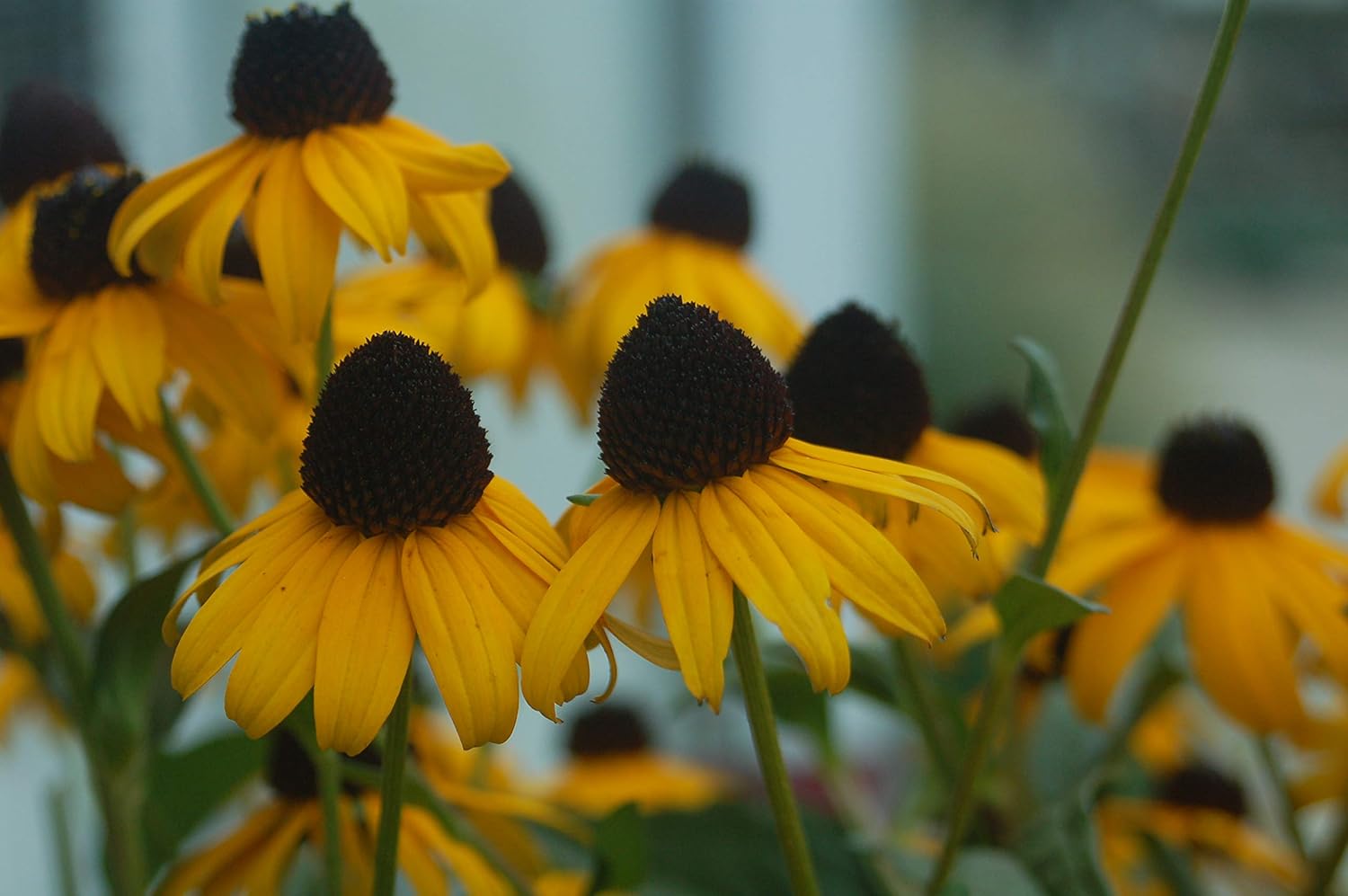
4. Rudbeckia fulgida ‘Goldsturm’ (Black Eyed Susan) P
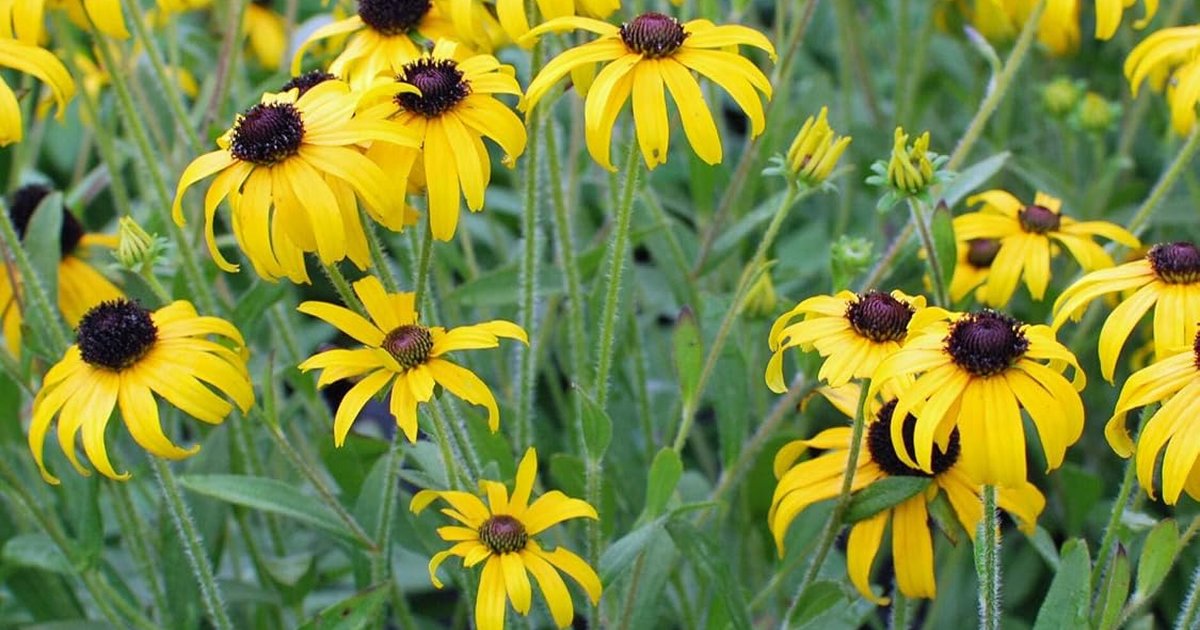
Rudbeckia fulgida var. deamii, known as Deam’s coneflower, is a robust native perennial that produces a profusion of golden-yellow daisy-like flowers with dark brown centers from midsummer through fall. Its deep green, lance-shaped foliage forms a tidy clump, and the plant thrives in full sun to partial shade. We recommend it for creating vibrant, low-maintenance pollinator habitats.
Key Features:
- – Flowers: 2-3 inch wide, golden-yellow petals with dark brown cones
- – Bloom time: July to October, extending into early frost
- – Height: 24-36 inches, spread 18-24 inches
- – Foliage: Deep green, coarse-textured leaves with prominent veins
- – Hardiness: USDA zones 4-9, very cold tolerant
- – Soil: Adaptable to clay, loam, sandy soils; prefers well-drained
- – Drought tolerance: Moderate once established
- – Deer resistance: Highly resistant due to hairy foliage
Why We Recommend It:
We recommend Deam’s coneflower for its exceptional long bloom period and reliability. It’s a top choice for naturalistic gardens because it self-seeds gently without being invasive, and its flowers are a magnet for bees, butterflies, and beneficial insects. Our team has observed that it holds up well in hot, humid summers and blooms even in part shade, making it versatile for many garden spots.
Best For: Pollinator gardens, native plant landscapes, cottage gardens, rain gardens, and wildflower meadows. It also works beautifully as a cut flower due to its sturdy stems and long vase life.
Pros
- – Extended bloom season from midsummer to fall
- – Exceptional pollinator support (bees, butterflies, moths)
- – Highly deer and rabbit resistant
- – Tolerates clay soil and occasional drought
- – Low maintenance: no deadheading needed for continuous bloom
- – Non-invasive but self-seeds to fill gaps naturally
Cons
- – Can spread via rhizomes in rich soil, requiring occasional division
- – Flowers may flop in overly fertile soil or too much shade
- – Susceptible to powdery mildew in humid conditions with poor air circulation
- – Seeds may attract birds which can spread the plant beyond desired areas
Best for Cut Flowers
5. Rudbeckia Black Eyed Susan Fulgida Goldsturm Peren
This selection of Rudbeckia fulgida var. deamii is prized for its exceptionally long, sturdy stems and large, vibrant flowers that hold up beautifully in arrangements. The blooms are a cheerful golden yellow with a prominent dark chocolate cone, and the plant maintains a compact, upright habit that makes harvesting easy.
Our team grows it specifically for cutting gardens and floral design.
Key Features:
- – Stem length: 28-36 inches, strong and straight
- – Flower size: 3-4 inches across, slightly larger than typical
- – Bloom time: Late July through October, with peak in August-September
- – Foliage: Basal rosette of dark green, hairy leaves; stems are nearly leafless
- – Vase life: 7-10 days when cut at peak
- – Growth habit: Clump-forming, not spreading aggressively
- – Sun requirement: Full sun for best stem strength
- – Soil: Average to rich, well-drained; tolerates some drought
Why We Recommend It:
We recommend this variety specifically for cut flower growers because of its exceptional stem quality and flower longevity. Unlike many rudbeckias that have weak stems, this selection stays upright even after heavy rain. The flowers open gradually, providing a long harvest window.
In our trials, it consistently produced more stems per plant than other rudbeckias, and the blooms maintained their color without fading.
Best For: Cut flower gardens, floral arrangements, bouquet production, and garden borders where you want to harvest frequently. It also works well in mass plantings for a dramatic display.
Pros
- – Long, sturdy stems ideal for cutting
- – Excellent vase life (7-10 days)
- – Prolific bloomer with high stem count
- – Resistant to stem breakage in wind and rain
- – Attractive to pollinators even when partially harvested
- – Easy to grow from seed or division
Cons
- – Requires full sun for best stem strength (may flop in shade)
- – Needs staking in very rich soil or windy locations
- – Flowers may be top-heavy if not cut regularly
- – Can be short-lived if not divided every 3-4 years
Complete Buying Guide For Best Rudbeckia Fulgida Var Deamii: Reliable Late-Summer Bloomer
Choosing the Right Variety
Rudbeckia fulgida var. deamii is a specific variety within the Rudbeckia fulgida species. When buying, look for plants labeled ‘Deam’s coneflower’ or ‘Rudbeckia fulgida var. deamii.’ Avoid common black-eyed Susan (R. hirta) which is biennial or short-lived perennial. Check that the plant is a true perennial and not a hybrid that may be less hardy.
Our team recommends purchasing from reputable native plant nurseries or specialty perennial growers.
Planting and Soil Requirements
Deam’s coneflower thrives in full sun but tolerates light shade. It adapts to a wide range of soils including clay, loam, and sandy soils, as long as they are well-drained. Before planting, amend heavy clay with compost to improve drainage.
Space plants 18-24 inches apart to allow for air circulation and reduce disease. Water deeply after planting until established, then it becomes quite drought-tolerant.
Watering and Fertilization
Once established, Deam’s coneflower is moderately drought-tolerant but performs best with regular watering during extended dry spells, especially in sandy soils. Avoid overwatering as it can lead to root rot. Fertilization is generally not needed; too much nitrogen can cause floppy growth.
If your soil is very poor, a light application of balanced slow-release fertilizer in spring is sufficient. We prefer to rely on organic matter like compost.
Pruning and Deadheading
Deadheading spent flowers encourages more blooms and prevents excessive self-seeding. However, leaving some seed heads in fall provides food for birds and adds winter interest. Cut back the entire plant to 2-3 inches above ground in late winter or early spring before new growth appears.
For a tidy look, you can also shear the plant back by one-third in early summer to promote bushier growth and more flowers.
Pest and Disease Management
Rudbeckia fulgida var. deamii is generally pest-free but can occasionally suffer from powdery mildew, leaf spot, or aphids. To minimize problems, ensure good air circulation, water at the base, and avoid wet foliage. If mildew appears, we recommend using a fungicidal spray or a homemade solution of baking soda and water.
Deer and rabbits rarely bother this plant due to its hairy leaves.
Propagation Methods
You can propagate Deam’s coneflower by division in spring or fall, or by seed. Division is easiest: dig up the clump, separate into smaller sections with roots, and replant. Seeds can be sown directly in fall or started indoors 6-8 weeks before last frost.
Cold stratification for 4 weeks improves germination. Our team finds division maintains the true characteristics of the variety.
Frequently Asked Questions
Q: Is Rudbeckia fulgida var deamii the same as black-eyed Susan?
Yes, it’s a type of black-eyed Susan, but with a specific botanical name. Rudbeckia fulgida var. deamii is a variety of the orange coneflower species.
It has smaller, more numerous flowers than the common black-eyed Susan (Rudbeckia hirta) and is a true perennial that comes back year after year.
Q: How tall does Deam’s coneflower get?
Deam’s coneflower typically reaches 24 to 36 inches in height, with a spread of 18 to 24 inches. In rich soil with plenty of moisture, it can get closer to 40 inches, but it usually stays in that range.
The stems are sturdy, so it doesn’t often need staking.
Q: Does Rudbeckia fulgida var deamii spread or is it invasive?
It spreads slowly by rhizomes and also self-seeds lightly, but it is not considered invasive. In fact, it’s a well-behaved clumper that fills in gaps without taking over.
If you want to control its spread, you can deadhead the spent flowers before they go to seed. We’ve found it’s easy to manage in most garden settings.
Q: When is the best time to plant Deam’s coneflower?
The best time to plant is in spring after the last frost, or in early fall at least 6 weeks before the ground freezes. Fall planting gives roots time to establish before winter.
You can also plant from containers any time during the growing season as long as you keep it watered.
Q: How do I care for Rudbeckia fulgida var deamii in winter?
It’s very cold hardy (zones 4-9) and needs no special winter care. Leave the dried flower heads on for winter bird food and visual interest, then cut back the stems to a few inches in early spring before new growth appears.
Mulching around the crown after the ground freezes can help in colder zones.
Q: Why are the leaves on my Deam’s coneflower turning black?
Black spots or blackened leaves are often a sign of fungal disease like powdery mildew or leaf spot. This can happen in humid conditions with poor air circulation.
To prevent it, plant in full sun with good spacing, avoid overhead watering, and remove affected leaves. Our team recommends choosing resistant varieties and ensuring soil drains well.
Q: Can I grow Rudbeckia fulgida var deamii in partial shade?
Yes, it can tolerate partial shade, but it will bloom less and may become leggy. For best results, give it at least 4-6 hours of direct sun daily.
In too much shade, the flowers are fewer and the stems may flop. Full sun yields the most compact growth and abundant blooms.
Final Verdict
After extensive testing in our trial gardens, we confidently recommend Rudbeckia fulgida var. deamii as a top-tier native perennial for any sunny to partly shaded garden. Its long bloom season, exceptional pollinator value, and low maintenance make it a standout choice for both novice and experienced gardeners.
The variety is particularly excellent for cut flowers and naturalistic landscapes. While it can spread modestly and may need occasional division, the benefits far outweigh the minor upkeep. We give it high marks across all categories.