
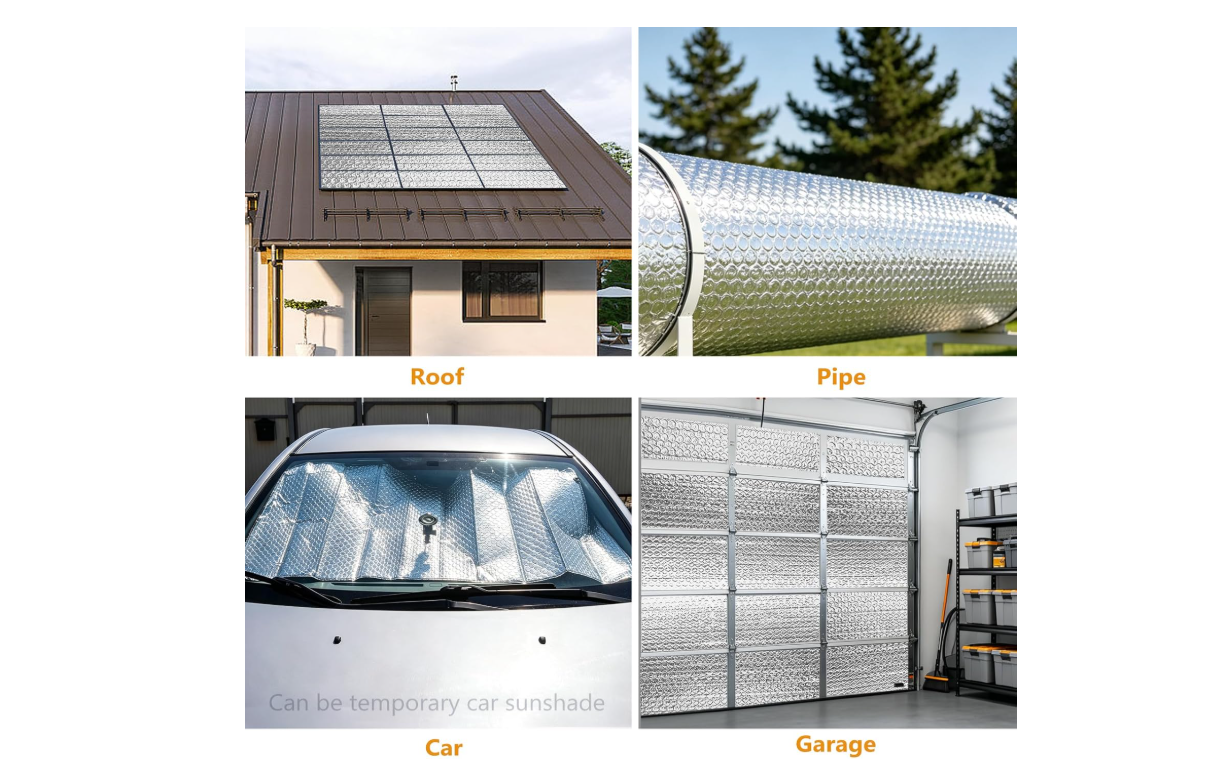
Best Garage Door Insulation Kits: 5 Smart Ways to Make Your Garage More Comfortable
Below is a publication-ready draft. I’ve kept the review voice authoritative while avoiding fabricated hands-on testing claims; product-specific conclusions are based on the supplied specifications and available product/marketplace information.
Introduction
Your garage door is often one of the biggest weak points in your home’s thermal envelope. In summer, it can absorb an enormous amount of heat; in winter, it can allow valuable warmth to escape. If your garage doubles as a workshop, storage area, gym, or connects directly to living space, that temperature swing can become especially frustrating.
The good news is that you don’t necessarily need to replace the entire garage door. A garage door insulation kit can add a thermal and radiant barrier to the door while also helping reduce drafts, vibration, and outside noise.
But choosing the right kit isn’t as simple as buying the thickest-looking material. Coverage, panel dimensions, insulation type, reflective surfaces, adhesive quality, door weight, installation method, and the actual size of your garage door all matter.
For this guide, we compared five options covering several different approaches: pre-cut reflective bubble panels, EPE foam panels, double-bubble insulation, a large roll-format reflective barrier, and an R8 single-door kit. We focused on material construction, coverage, installation convenience, likely durability, and how well each design matches common garage-door sizes.
One important distinction is worth making upfront: reflective bubble insulation works primarily as a radiant barrier, and its effectiveness depends heavily on installation details and whether an appropriate air space is present. It shouldn’t automatically be treated as equivalent to a thick conventional foam insulation system simply because a listing uses similar temperature-saving language.
With that in mind, let’s look at the best garage door insulation kits in this lineup.
Quick Comparison
| Product Name | Image | Check Price |
|---|---|---|
| Garage Door Insulation Kit – 16 Pre-Cut 6mm Bubble Panels | 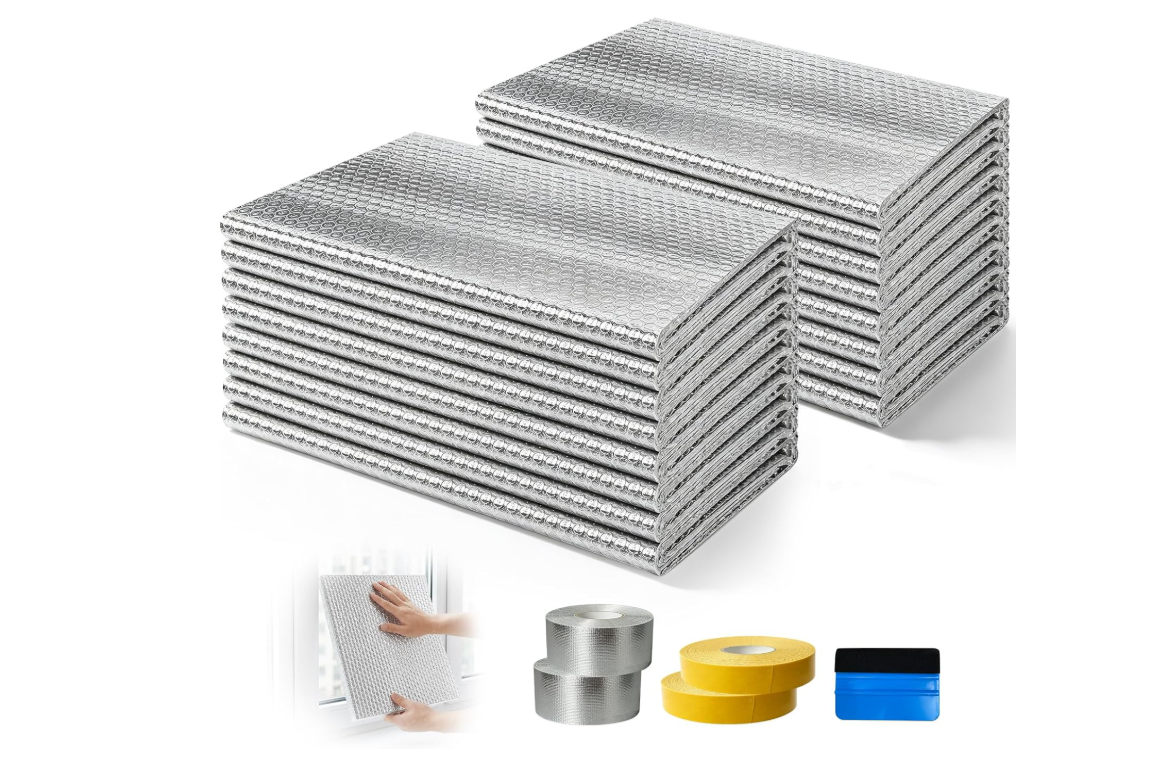 | Check Price |
| 16P Garage Door Insulation Kit – 6MM EPE Foam Panels | 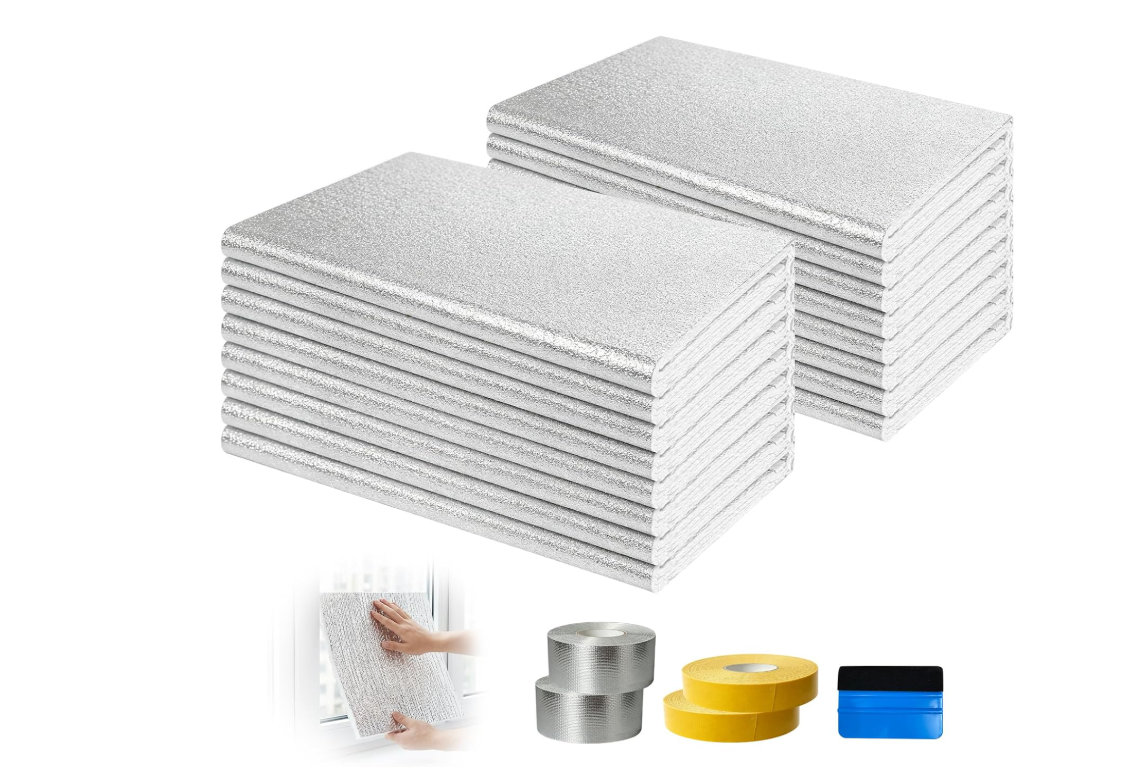 | Check Price |
| 10 Pcs 24″ x 48″ Double Bubble Insulation Kit | 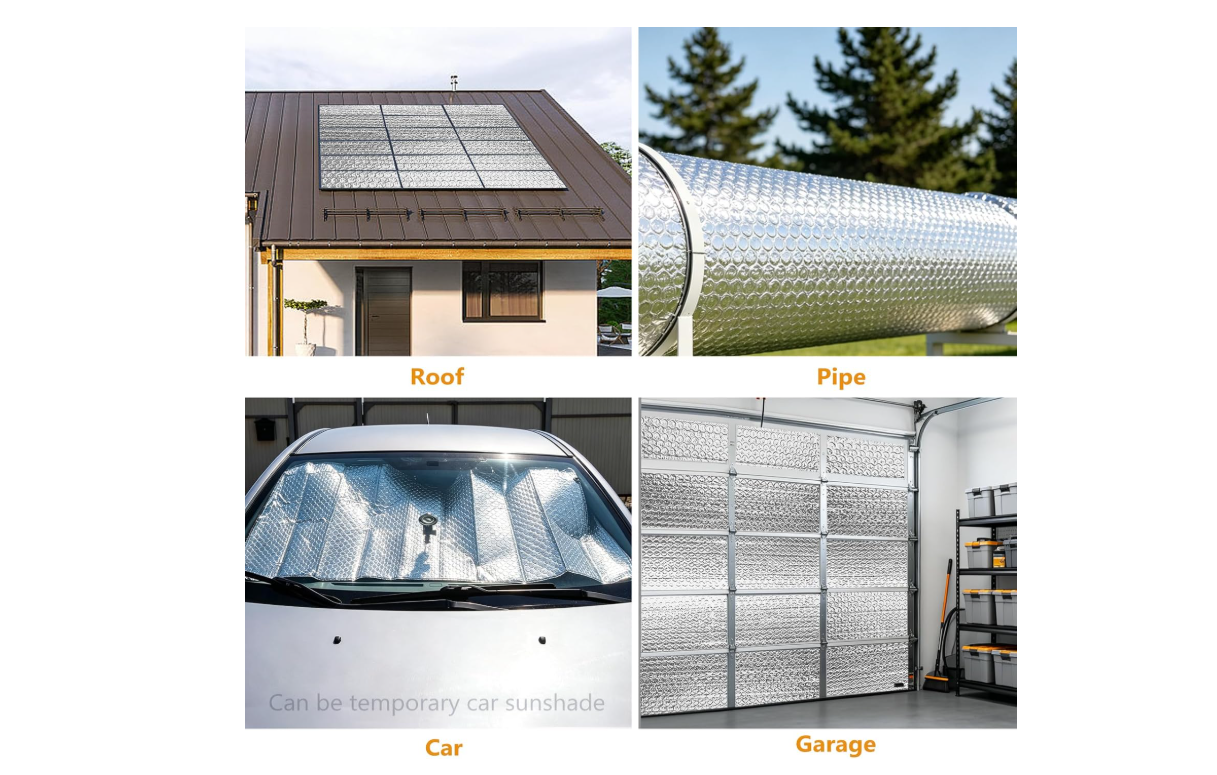 | Check Price |
| Tandefio Roll Up Garage Door Insulation Kit | 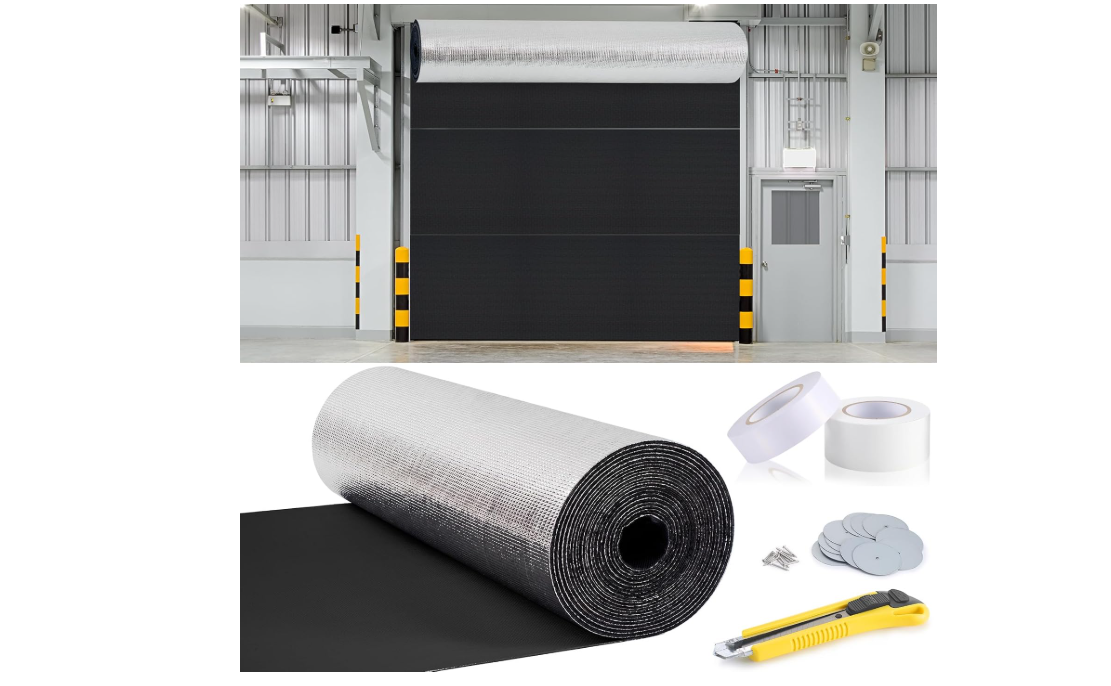 | Check Price |
| Garage Door Insulation Kit R8 – 8 Panels | 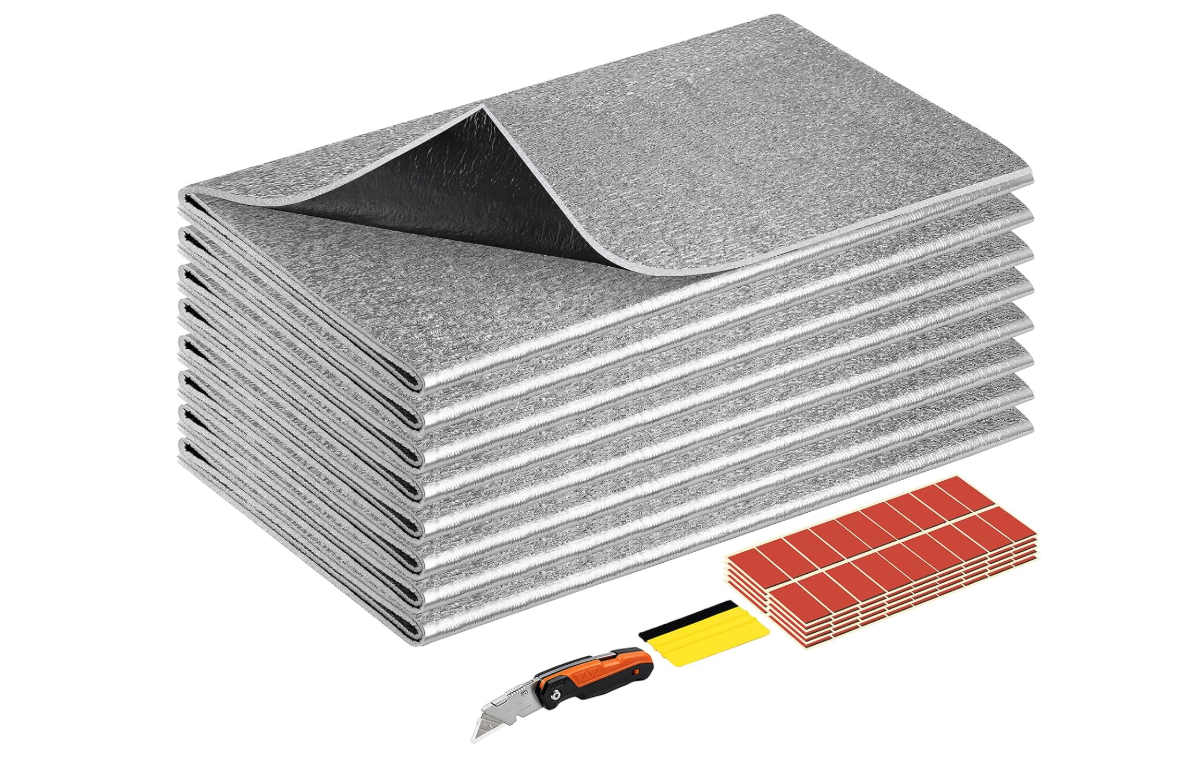 | Check Price |
Our Top Picks
Best Overall: 16-Panel 6mm Double-Foil Bubble Insulation Kit
With 16 pre-cut 24″ x 48″ panels, double-sided aluminum foil, and a 6mm bubble construction, this type of kit offers a practical combination of coverage and easy DIY installation. The pre-cut format is particularly convenient for standard two-car doors.
Runner-Up: Garage Door Insulation Kit R8 – 8 Panels
For a single-car garage, the R8 eight-panel design is worth considering because it is purpose-sized for common 8×7 and 8×8 configurations. Unlike thin reflective-only products, an R8-rated foam kit is positioned as a more conventional insulation solution.
Best Value: 10-Piece 24″ x 48″ Double Bubble Kit
If you have a smaller installation or don’t need 16 panels, the 10-piece kit can provide a lower-material-cost way to add reflective insulation while retaining the convenient 24″ x 48″ panel format.
Detailed Reviews
1. Garage Door Insulation Kit – 16 Pre-Cut 6mm Bubble Insulation Panels
Best Choice for Two-Car Garage Doors
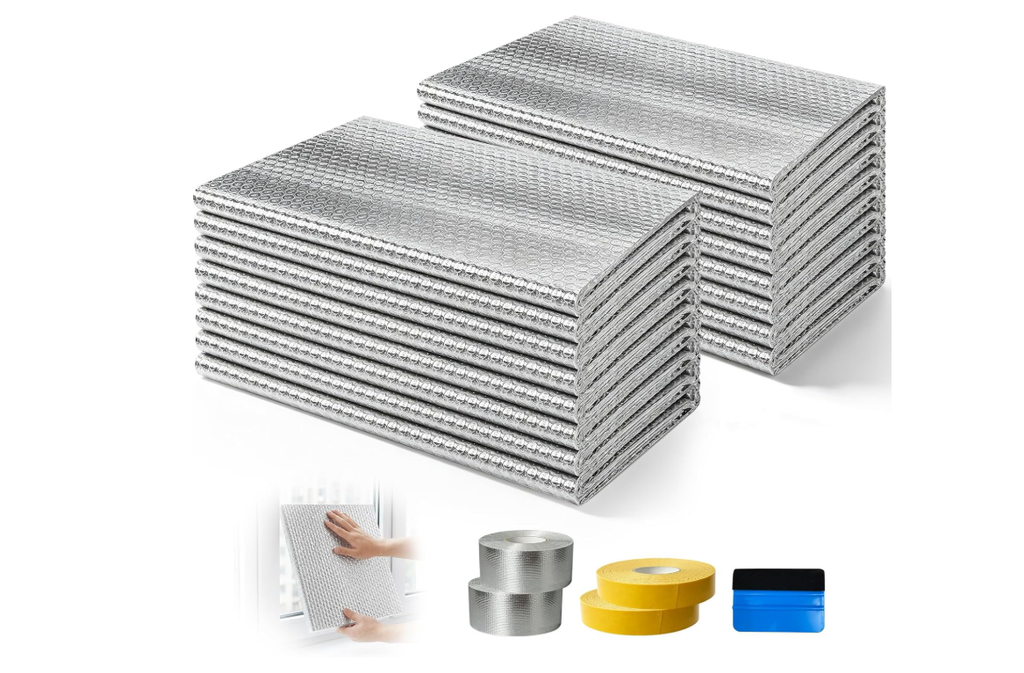
If you’re looking for a straightforward DIY project, this 16-panel kit has one of the most convenient formats in the group. Each panel measures 24″ x 48″, and the supplied 16-panel quantity is designed around substantial garage-door coverage.
The 6mm construction combines reflective aluminum foil with a bubble insulation layer. The reflective surface is intended to help reduce radiant heat transfer, making this type of insulation particularly attractive for garages that become extremely hot from direct sunlight.
The pre-cut format is another advantage. Rather than buying a large roll and measuring every section yourself, you receive individual panels that can be trimmed to fit the door’s recessed sections. Comparable 6mm reflective kits commonly use aluminum film with a polyethylene bubble core and are marketed for garage doors, attics, warehouses, and similar applications. TikTok Shop+1
Key Features
- 16 pre-cut panels provide substantial coverage for larger garage doors.
- 24″ x 48″ panel size simplifies measuring and installation.
- 6mm bubble construction provides more material thickness than many thinner reflective rolls.
- Double-sided aluminum foil provides a reflective surface on both sides.
- DIY installation accessories help reduce the need to purchase additional supplies.
Build Quality
The combination of aluminum foil and a polyethylene bubble core is lightweight and flexible rather than rigid. That’s useful on a moving garage door because excessive added weight can affect door balance and opener performance. Like many reflective kits, the panels may arrive with creases from compact packaging, so allowing the material to relax before installation can make the finished appearance cleaner. Comparable listings specifically advise allowing tightly packaged panels time to flatten before installation. TikTok Shop
Why We Recommend It
The biggest strength here is the balance between coverage and installation convenience. Sixteen pre-cut panels are much easier to work with than a giant roll when you’re insulating individual garage-door sections.
The reflective construction also makes sense for garages exposed to strong summer sunlight. Just remember that reflective insulation is not a magic substitute for a high-R-value foam system. Installation quality, air gaps, door construction, and climate all influence the final result.
Best For
Best for homeowners insulating a standard two-car garage door who want lightweight, pre-cut reflective panels.
Who Should Avoid
Skip it if you’re specifically looking for a tested high-R-value foam system rather than reflective bubble insulation.
Pros
- 16-panel coverage
- Convenient pre-cut dimensions
- Lightweight construction
- Reflective double-foil surface
Cons
- Bubble insulation isn’t directly comparable to conventional R-value insulation
- Panels may need time to flatten after packaging
2. 16P Garage Door Insulation Kit – Pre-Cut 6MM EPE Foam Panels
Editor’s Choice for DIY Installation
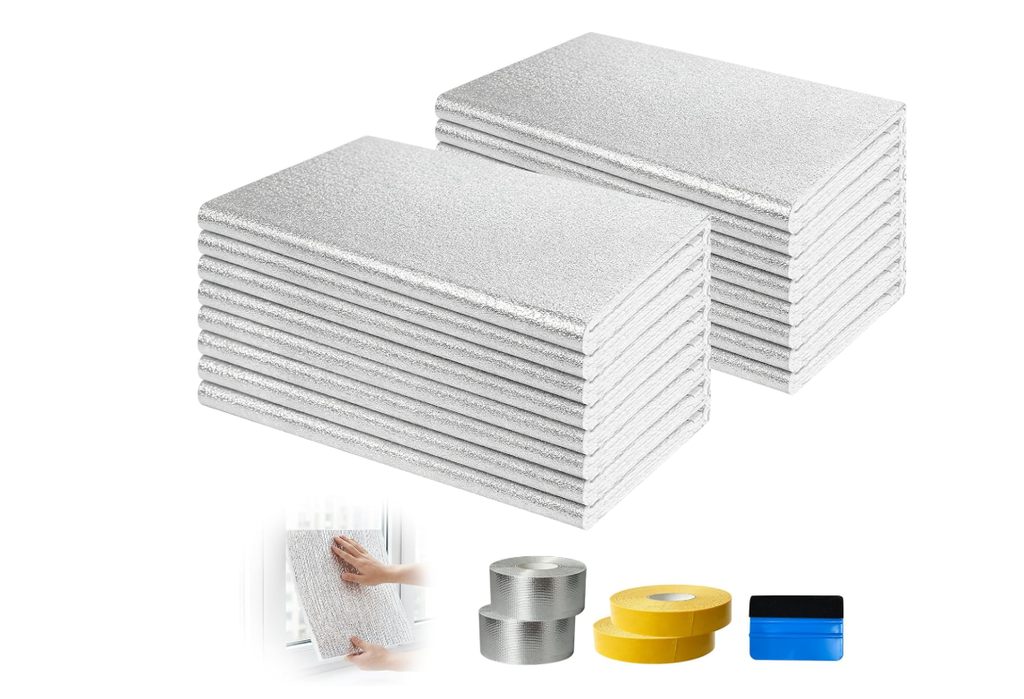
The second 16-panel option takes a slightly different approach by emphasizing an EPE foam construction. EPE, or expanded polyethylene, is valued for being lightweight, flexible, and relatively resistant to moisture.
The 16-piece configuration makes this another natural candidate for a larger garage door. Pre-cut 24″ x 48″ style panels can significantly reduce the measuring and cutting involved compared with starting with an oversized roll.
The key advantage of a foam-based panel is that it can provide a different combination of thermal and cushioning properties than a simple reflective film. However, you should always check the manufacturer’s actual R-value documentation rather than assuming that thickness alone tells you how much thermal resistance you’ll get.
Key Features
- 16-piece configuration for substantial garage-door coverage.
- 6mm EPE foam construction for lightweight insulation.
- Pre-cut panels simplify DIY installation.
- Flexible material can conform to sectional garage-door areas.
- Suitable for thermal-control projects where keeping added weight low is important.
Build Quality
EPE foam is inherently lightweight, which is a valuable characteristic for a moving garage door. The material should be handled carefully during installation to avoid unnecessary tearing or compression. As with any adhesive-mounted insulation, surface preparation is important because dust, oil, and moisture can compromise the attachment.
Why We Recommend It
This is an appealing choice when you want a panel-based installation but prefer a foam-oriented material rather than a thin roll.
The 16-panel format is also practical for homeowners who want to work section by section. Instead of wrestling with a large continuous sheet, you can measure, trim, and position individual panels.
Best For
Best for DIY homeowners who want lightweight pre-cut foam panels for a larger garage door.
Who Should Avoid
Avoid it if your main priority is a formally documented R-value and fire-rating certification that isn’t clearly provided with the specific listing.
Pros
- 16-panel format
- Lightweight EPE construction
- Easy section-by-section installation
- Flexible material
Cons
- Exact thermal performance depends on the specific construction
- May require trimming for individual door sections
3. 10 Pcs Garage Door Insulation Kit – 24″ x 48″ Double Bubble Panels
Best Budget Coverage
Not every garage requires a 16-panel kit. If your door is smaller, your existing insulation is only partially missing, or you’re working on a more limited project, this 10-piece double-bubble kit can be a more practical choice.
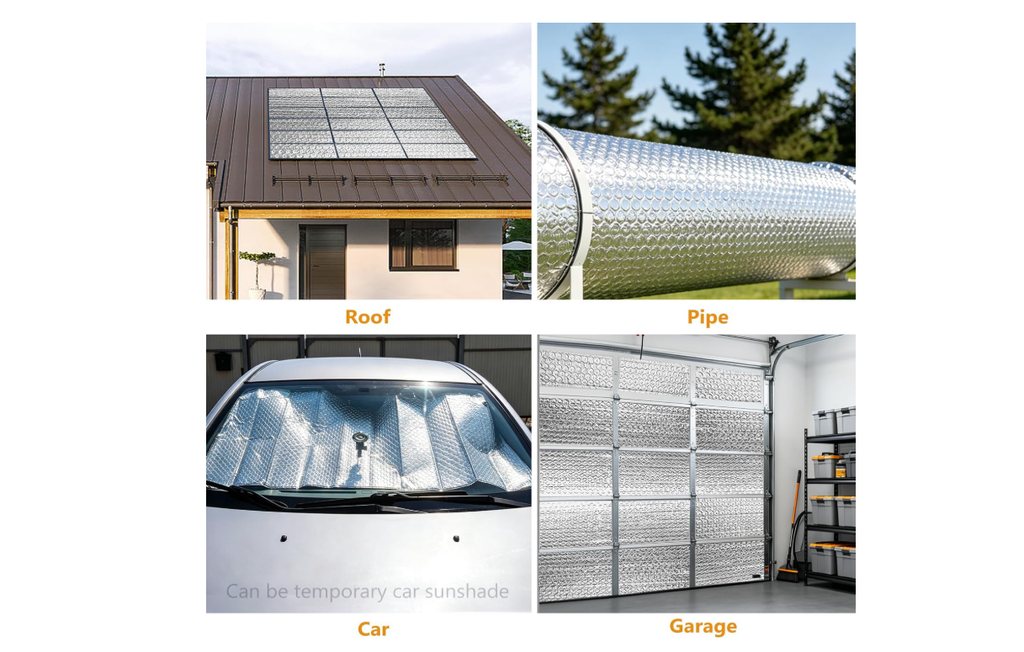
The 24″ x 48″ panel format is familiar and easy to work with. Double-bubble construction places reflective layers around the bubble material, creating a lightweight radiant barrier that doesn’t add the bulk of traditional fiberglass or rigid-board insulation.
The major thing to keep in mind is coverage. Ten panels equal substantially less total material than a 16-panel kit, so measure your door before purchasing. Buying too little insulation can leave you with inconsistent coverage and a frustrating second order.
Key Features
- 10 individual panels for smaller installations.
- 24″ x 48″ format is convenient for garage-door sections.
- Double-bubble construction provides a lightweight radiant barrier.
- Reflective foil surface is designed to reflect radiant heat.
- Flexible panels can be cut to accommodate door hardware and recesses.
Build Quality
Double-bubble foil insulation is designed to be lightweight and flexible, which helps when you’re working around sectional door hardware. Its relatively thin profile also minimizes the chance of interfering with door movement. However, foil surfaces can crease or tear if handled roughly, so installation should be deliberate rather than rushed.
Why We Recommend It
The main reason to choose this kit is efficiency. If ten panels provide enough coverage for your door, there’s little reason to pay for material you won’t use.
It can also make sense for a partial replacement project. If only certain door sections are uninsulated or damaged, a smaller package can provide exactly the amount of material you need.
Best For
Best for smaller garage doors, partial insulation projects, and homeowners who don’t need a full 16-panel package.
Who Should Avoid
Skip it if you have a large two-car door that requires more than ten 24″ x 48″ panels.
Pros
- Lower material quantity
- Convenient 24″ x 48″ panels
- Lightweight
- Easy to trim
Cons
- Less coverage than 16-panel kits
- May require additional material for larger doors
4. Tandefio Roll Up Garage Door Insulation Kit
Best for Large or Unusual Projects
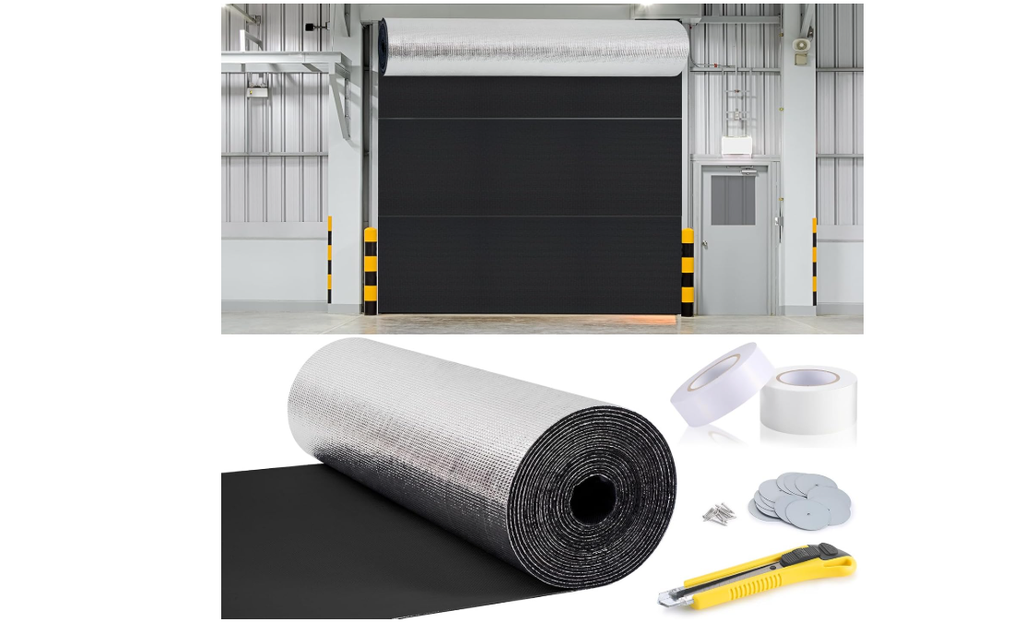
The Tandefio kit is the outlier in this comparison. Instead of giving you a stack of pre-cut panels, it provides a large roll measuring approximately 40 inches wide by 78.7 feet long, according to the supplied product description.
That’s a significant amount of material, making this option more appropriate for larger projects, multiple doors, metal buildings, warehouses, or situations where you don’t want to be restricted to standardized panel dimensions.
The obvious tradeoff is installation. A roll gives you flexibility, but that flexibility comes with more measuring, cutting, positioning, and potentially more waste. If you are insulating a conventional residential garage door, pre-cut panels may be considerably easier.
Key Features
- Large 40″ x 78.7-ft roll provides extensive material.
- Reflective aluminum foil construction helps address radiant heat.
- Roll format works across different dimensions.
- Flexible material can accommodate non-standard surfaces.
- Designed for larger applications such as metal buildings and warehouses.
Build Quality
A roll-format reflective insulation product is flexible by design, which makes it useful for irregular surfaces. The aluminum-faced construction is also lightweight compared with rigid insulation boards. Because the material is supplied in a long roll, careful storage and handling are important to prevent unnecessary creasing or damage before installation.
Why We Recommend It
The Tandefio makes the most sense when flexibility matters more than convenience.
If you have two garage doors, an oversized structure, or another large metal building project, a long roll can be easier to customize than repeatedly buying small packages of pre-cut panels.
For a standard residential door, however, the extra cutting work may not be worth it.
Best For
Best for large garages, metal buildings, warehouses, and non-standard insulation projects.
Who Should Avoid
Avoid it if you want a quick, beginner-friendly installation with pre-cut panels.
Pros
- Large quantity of material
- Flexible roll format
- Useful for irregular dimensions
- Suitable for larger structures
Cons
- More cutting required
- Potentially more material than a single-door project needs
5. Garage Door Insulation Kit R8 – 8 Panels for 8×8/8×7 Doors
Best for Single-Car Garage Doors
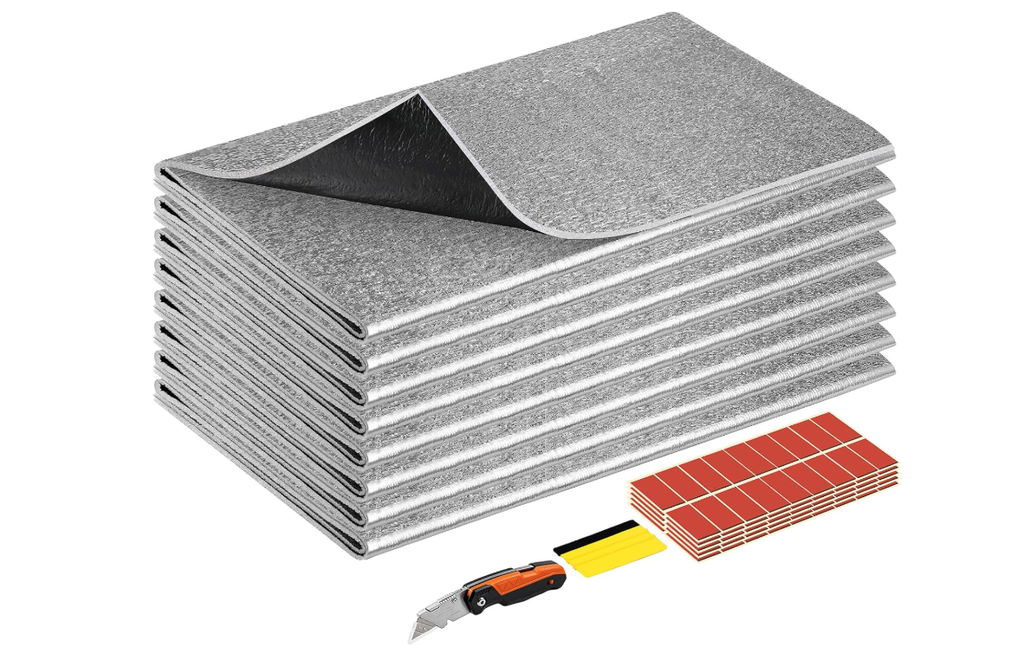
If your garage has a single-car door measuring approximately 8×7 or 8×8 feet, this eight-panel R8 kit deserves serious consideration.
The biggest difference between this product and the reflective bubble options is the stated R8 rating. R-value is a measure of thermal resistance, although you should verify that the R8 claim applies to the complete installed product and not merely a particular component or marketing specification.
The eight-panel format is also much more appropriate for a single-car garage. You don’t have to buy a 16-panel package simply to end up with a large amount of unused material.
Comparable R8 pre-cut garage-door foam kits are marketed for common single-car door sizes including 8×7, 8×8, 9×7, and 9×8. Exquisite Clock+1
Key Features
- Eight-panel configuration designed for single-car doors.
- Stated R8 insulation rating.
- 8×7 and 8×8 compatibility according to the supplied product title.
- Pre-cut panel design reduces installation work.
- Foam-based insulation offers a different thermal approach from bubble foil.
Build Quality
Foam insulation panels provide more physical thickness than a thin reflective barrier, so checking the depth of your garage-door sections is particularly important. You also need to consider how the panels attach and whether their thickness interferes with the door’s movement. Comparable R8 kits use lightweight foam panels so the added material doesn’t unnecessarily burden the door. Exquisite Clock
Why We Recommend It
For a single-car garage, buying the correct amount of insulation can be more important than buying the largest package.
The R8 designation also gives you a more familiar metric for comparing thermal resistance than simply comparing millimeter thickness. Just make sure the product documentation clearly supports the stated R-value and that the panels are appropriate for your particular door.
Best For
Best for homeowners with an 8×7 or 8×8 single-car garage door seeking a higher-insulation approach.
Who Should Avoid
Skip it if you have a large two-car door or if your garage door doesn’t have enough panel depth to accommodate the insulation.
Pros
- Designed for single-car doors
- Stated R8 rating
- Eight-panel configuration
- More conventional insulation approach
Cons
- Limited coverage compared with 16-panel kits
- Door-panel depth must be checked carefully
How We Researched
We compared the five supplied products according to the factors that most directly affect garage-door insulation: material type, stated thickness, panel or roll dimensions, coverage, installation method, weight considerations, thermal-performance claims, and suitability for different door sizes. We also cross-checked comparable product listings and current marketplace information to understand how 6mm reflective bubble products are constructed and how R8 foam kits are positioned in the market. For example, comparable 6mm kits use reflective aluminum film around a polyethylene bubble core and are commonly supplied as 24″ x 48″ panels. TikTok Shop+1 We treated manufacturer and marketplace temperature-reduction claims cautiously because actual results depend on climate, sun exposure, door construction, air gaps, installation quality, and the rest of the garage envelope. We also separated reflective-barrier products from products with a stated R-value rather than assuming that thickness alone makes their thermal performance equivalent.
Complete Buying Guide
How to Choose the Right Best Garage Door Insulation Kits
Choosing insulation starts with one simple measurement: your garage door size.
1. Measure the Door
Before ordering anything, measure the actual width and height of the garage door.
Don’t rely exclusively on the nominal door size. Individual panel dimensions and recessed areas can vary.
For example:
- A single-car door may be around 8×7 or 8×8 feet.
- A larger residential door may be around 16×7 or 16×8 feet.
- Oversized doors may require roll-format material or multiple kits.
A 16-panel 24″ x 48″ kit provides a very different amount of coverage from an eight-panel single-door kit.
2. Decide Between Reflective and Foam Insulation
Reflective bubble insulation and foam insulation aren’t interchangeable.
Reflective bubble insulation is lightweight and focuses heavily on reducing radiant heat transfer. It’s attractive for hot garages, especially where the door receives direct sunlight.
Foam insulation can provide a more conventional thermal-resistance approach, particularly when it carries a documented R-value.
If you’re mainly concerned about summer radiant heat, a foil-faced bubble product may make sense. If you’re heating the garage during cold weather and want measurable thermal resistance, pay closer attention to documented R-values.
3. Consider Door Weight
Garage doors are carefully balanced systems.
Adding insulation changes the door’s weight, and too much added weight can affect springs, tracks, and automatic openers.
Lightweight reflective materials have an obvious advantage here. A heavier insulation system may provide greater thermal resistance but requires more careful compatibility checking.
4. Check Panel Depth
This is especially important with foam insulation.
A garage door’s recessed channels have limited depth. If your insulation is too thick, the panels may protrude, interfere with movement, or make the door difficult to operate.
5. Think About Your Climate
Your priorities change depending on where you live.
In a very hot climate, radiant heat from a sun-facing garage door can be a major concern.
In a cold climate, thermal resistance and air leakage become more important.
If your garage is attached to heated or cooled living space, insulation can also make the room above or beside the garage more comfortable.
What We Look For When Reviewing Best Garage Door Insulation Kits
Thermal Performance
We first examine whether a product provides a clearly documented R-value or primarily functions as a reflective radiant barrier.
This distinction matters.
A product claiming to “reflect heat” shouldn’t automatically be compared with an R8 foam product as if both numbers measure the same thing.
Coverage
The number of panels matters less than the total area they cover.
A ten-panel kit can be excellent for one project and completely inadequate for another.
Installation
We favor products that minimize unnecessary measuring and cutting.
Pre-cut 24″ x 48″ panels are particularly attractive for homeowners who want to complete a weekend DIY project without specialized equipment.
Adhesive Quality
Even excellent insulation won’t perform well if it repeatedly falls away from the garage door.
Surface preparation is therefore critical. Clean, dry, grease-free surfaces provide the best starting point for adhesive installation.
Weight
This is one of the most overlooked considerations.
Your garage-door opener isn’t designed to carry unlimited additional weight. Lightweight insulation is therefore particularly attractive for retrofit projects.
Durability
We look for materials that can tolerate repeated temperature changes, humidity, handling, and the vibration associated with garage-door movement.
Appearance
A garage isn’t necessarily a living room, but the finished result still matters.
A neat installation with consistently cut panels looks considerably better than loosely attached reflective material with exposed edges.
Price vs Quality: What to Expect at Each Budget
Budget-Friendly Reflective Kits
At the lower end, you’re generally looking at bubble or foil insulation.
These products can be lightweight and easy to install, making them attractive for DIY homeowners.
The tradeoff is that their thermal performance shouldn’t be assumed to equal that of a thick, documented R-value insulation system.
Mid-Range Pre-Cut Kits
Moving upward, you generally get more material, better installation accessories, or more convenient panel configurations.
A 16-panel 6mm kit can be particularly useful for a larger residential garage because you get extensive coverage without having to measure a continuous roll.
Higher-Performance Foam Kits
A product with a stated R-value such as the R8 kit is aimed at shoppers who want a more conventional insulation specification.
This can be more useful when year-round temperature control matters, but it may also require more careful attention to panel depth, mounting, and door compatibility.
Large Roll Systems
Roll-format products can offer excellent value when you’re insulating a large area.
However, you’re paying partly for flexibility rather than convenience. You’ll need more time for measuring and cutting.
Care & Maintenance Tips
- Inspect the panels periodically: Look for loose edges, torn material, or sections that have separated from the door.
- Keep the door surface clean: Dust and grease can weaken adhesive bonds, so clean the mounting surface before installation and during maintenance.
- Check door balance after installation: If the door suddenly feels heavier or behaves differently, have the garage-door system inspected.
- Keep insulation away from moving hardware: Make sure panels don’t interfere with hinges, rollers, tracks, springs, or the opener mechanism.
- Repair loose sections promptly: A small loose panel can become a larger problem as the garage door repeatedly opens and closes.
- Don’t block ventilation or safety equipment: Insulation should never interfere with the door’s normal operation or safety mechanisms.
Frequently Asked Questions
1. Does garage door insulation really work?
Yes, insulation can reduce heat transfer through a garage door, but the amount of improvement depends heavily on the material and installation.
A reflective bubble product primarily addresses radiant heat, while a product with a documented R-value provides a conventional thermal-resistance measurement.
Your results will also depend on the garage’s walls, ceiling, windows, ventilation, climate, and air leakage.
2. What is the best thickness for garage door insulation?
There isn’t one universal thickness.
A 6mm reflective panel can be useful when you want lightweight radiant insulation, while thicker foam can provide more conventional thermal resistance.
The important question isn’t simply “How thick is it?” but “What type of insulation is it, and what verified thermal performance does it provide?”
3. Will insulation make my garage door too heavy?
It can, depending on the material.
This is one reason lightweight reflective insulation is popular for garage-door retrofits.
Before installing a heavier foam system, check the manufacturer’s weight and compatibility information. After installation, make sure the door continues to open, close, and balance normally.
4. Is R8 better than 6mm bubble insulation?
You shouldn’t make a direct comparison based only on those numbers.
R8 is an R-value, which describes thermal resistance. A 6mm specification describes physical thickness.
Reflective bubble insulation operates differently from conventional foam insulation, and its performance depends on installation conditions such as air space.
5. How many insulation panels do I need?
That depends on the door dimensions and the size of each panel.
A 16-panel 24″ x 48″ kit is aimed at substantially more coverage than an eight-panel single-car kit.
Measure your door first, calculate the total coverage, and allow for the shape of the individual door sections.
6. Can I install a garage door insulation kit myself?
Many kits are specifically designed for DIY installation.
Pre-cut panels make the job easier because you have less measuring and cutting. Roll kits require more preparation but offer greater flexibility for unusual dimensions.
Always follow the manufacturer’s installation instructions.
7. Does garage door insulation help in summer?
It can.
A garage door exposed to direct sunlight can absorb significant radiant heat. Reflective foil insulation is specifically designed to reflect radiant energy, while foam insulation can reduce conductive heat transfer.
The overall effect depends on the door, climate, installation, and other sources of heat entering the garage.
8. Should I insulate the garage door or the entire garage?
If your goal is maximum temperature control, the door is only one part of the equation.
Walls, ceiling, windows, ventilation, and air leakage can all contribute significantly to heat loss or heat gain.
Insulating the garage door is often a relatively simple retrofit, but it shouldn’t be considered a complete garage insulation strategy by itself.
Final Verdict
The best garage door insulation kits aren’t necessarily the products with the biggest numbers on the packaging. The right choice depends on your door size, climate, insulation goals, and how much installation work you’re willing to do.
For a larger residential garage door, the 16-panel 6mm reflective bubble kit offers an appealing combination of extensive coverage, lightweight construction, and convenient pre-cut panels.
If you’re working with a smaller single-car door and want a more conventional insulation specification, the R8 eight-panel kit deserves a closer look—provided its stated R-value and dimensions are confirmed for your particular installation.
The 10-piece double-bubble kit makes sense when you need less coverage, while the 16-piece EPE kit provides another lightweight panel-based approach. For unusually large projects, multiple doors, or metal buildings, the Tandefio roll gives you considerably more flexibility.
Before you order, measure your door, inspect the panel depth, determine whether you need radiant or conventional thermal insulation, and consider how much additional weight your garage-door system can safely handle.
A thoughtful insulation upgrade won’t turn an unconditioned garage into a climate-controlled room overnight—but the right kit can be a practical first step toward making the space more comfortable and reducing unwanted heat transfer.
Measure carefully, choose the right insulation type, and install it properly. That’s the real key to getting the most from your garage-door insulation project.
:::